
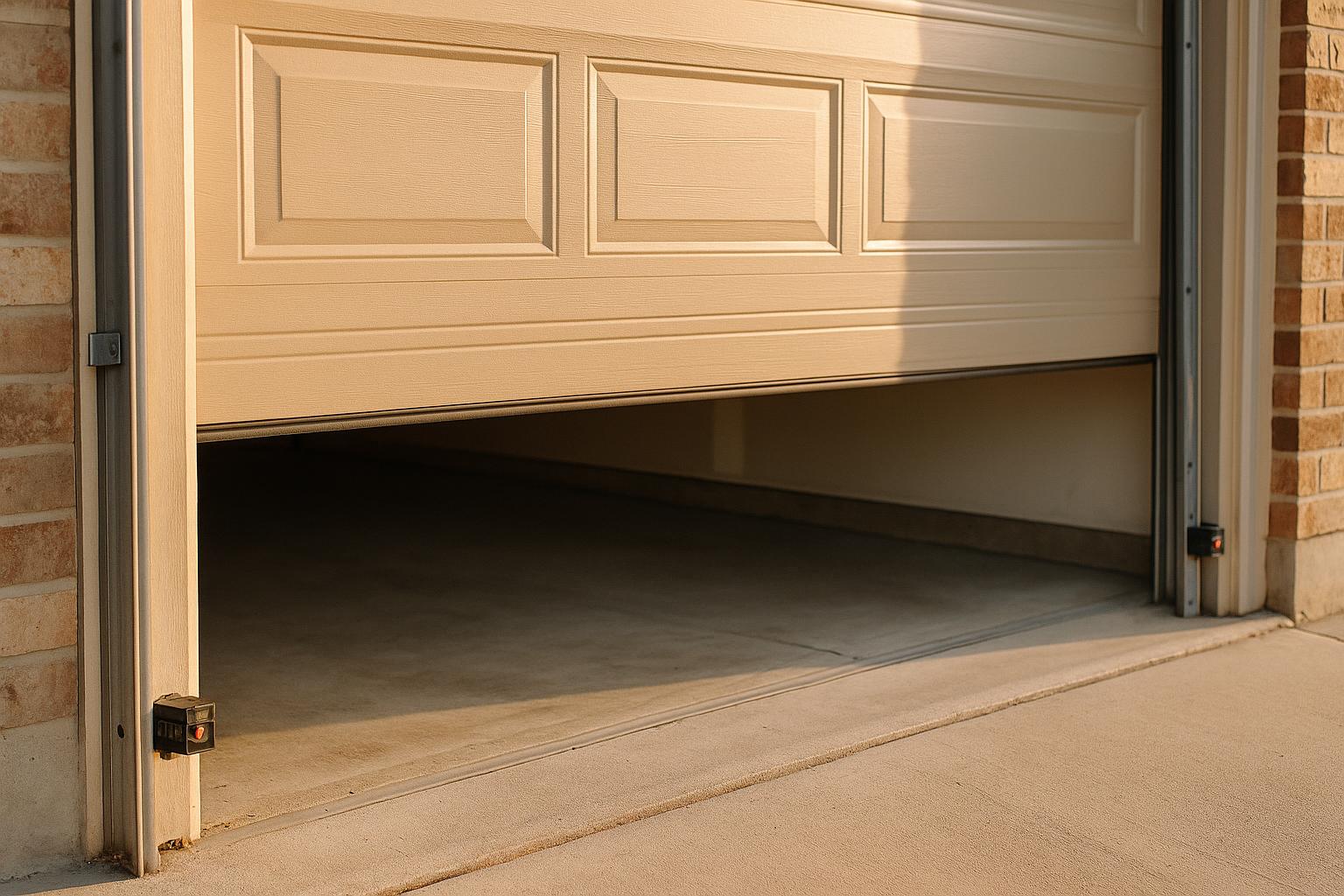
That Frustrating Moment When Your Garage Door Won't Stay Closed
You press the button on your garage door remote, watch the door glide downward, and then — just before it reaches the floor — it stops and reverses right back up. You try again. Same thing. Maybe it works on the third attempt, maybe it doesn't. Either way, you're left standing in your driveway wondering what's going on.
This is one of the most common garage door complaints we hear from homeowners in Haltom City and the surrounding area. The good news is that it's usually caused by one of a handful of issues, most of which are straightforward to diagnose. The not-so-good news is that ignoring it can lead to bigger problems down the road — including a door that stops working entirely or becomes a safety hazard.
Let's walk through the most likely reasons your garage door reverses before closing all the way and what you can do about each one.
1. Misaligned or Dirty Safety Sensors
This is the number one cause of a garage door that reverses before reaching the ground. Every modern garage door opener manufactured after 1993 is required to have photo-eye safety sensors mounted near the bottom of the door tracks on both sides. These sensors send an invisible beam across the opening. If anything breaks that beam — a person, a pet, a trash can — the door automatically reverses to prevent injury or damage.
The problem is that these sensors can become misaligned over time. A bump from a bicycle, a lawn mower vibration, or even settling of the garage structure can knock them out of alignment. When the two sensors can't "see" each other, the opener interprets this as an obstruction and reverses the door.
What to check:
- Look at the LED lights on each sensor. Typically, one should glow green (receiving) and one amber (sending). If the green light is off or blinking, the sensors are misaligned.
- Clean the sensor lenses with a soft cloth. Dust, cobwebs, and dirt buildup — especially common here in Tarrant County where we get plenty of wind and pollen — can block the beam.
- Make sure nothing is physically blocking the path between the two sensors.
If cleaning and gently adjusting the sensors doesn't solve the problem, the wiring or the sensors themselves may need replacement.
2. Incorrect Close-Limit Settings
Your garage door opener has close-limit settings that tell it how far the door should travel before it's considered fully closed. If these settings are off — set too far, specifically — the opener thinks the door has hit something when it contacts the floor, so it reverses as a safety measure.
This issue often shows up after a new opener installation or when someone has recently adjusted the settings. It can also develop gradually as components wear and the door's travel distance changes slightly.
What to do:
- Consult your opener's manual for instructions on adjusting the close-limit switch or setting. On most models, this involves turning a small screw or pressing buttons on the motor unit.
- Make small adjustments — a quarter turn at a time — and test after each one.
- If you're not comfortable making this adjustment yourself, a professional can dial it in quickly.
3. Worn or Broken Springs
Garage door springs do the heavy lifting — literally. They counterbalance the weight of the door so the opener motor doesn't have to do all the work. When springs wear out, weaken, or break, the door becomes much heavier than the opener expects. The opener's built-in force settings detect this extra resistance and reverse the door to prevent damage.
You might notice other signs of spring trouble alongside the reversing issue:
- The door feels unusually heavy when you try to lift it manually
- You hear loud creaking or popping sounds during operation
- The door opens unevenly or appears crooked
- There's a visible gap in one of the torsion springs above the door
Important: Garage door springs are under extreme tension and can cause serious injury if handled improperly. Spring replacement is one repair we always recommend leaving to a trained technician. If you suspect a spring issue, give us a call rather than attempting a DIY fix.
4. Obstructions in the Track
Sometimes the cause is purely mechanical. Small debris, a loose bolt, or a dent in the track can create enough resistance to trigger the opener's auto-reverse feature. Over time, tracks can also shift or become misaligned, especially in older garages where the structure has settled.
What to check:
- Visually inspect both tracks from top to bottom. Look for dents, bends, or anything lodged in the channel.
- Check that the tracks are securely fastened to the wall brackets.
- Listen for scraping or grinding sounds when the door moves — these indicate the rollers aren't traveling smoothly through the tracks.
5. Force Settings Need Adjustment
In addition to limit settings, your opener has force settings that determine how much power it uses to open and close the door. If the closing force is set too low, the opener may not have enough power to push the door all the way down, especially if there's even minor friction in the system. It interprets the resistance as an obstruction and reverses.
This is another adjustment you can make yourself on most openers by turning a small screw labeled "close force" or "down force." Again, make small incremental changes and test between each adjustment.
6. Worn Rollers or Hinges
Garage door rollers and hinges wear out over time. When they do, they create friction and resistance that the door didn't have when everything was new. Nylon rollers typically last longer than steel ones, but both eventually need replacement. If your garage door is more than seven to ten years old and you've never replaced the rollers, this could easily be contributing to the reversing problem.
Worn rollers also make the door louder during operation — something your neighbors in Haltom City will appreciate you fixing, especially if you're leaving for work early in the morning.
When to Call a Professional
Some of these fixes — cleaning sensors, removing debris from tracks — are well within the ability of most homeowners. Others, like spring replacement, track realignment, and opener adjustments, are safer and more effectively handled by a professional.
Here's a good rule of thumb: if you've cleaned the sensors, checked for obvious obstructions, and the door is still reversing, it's time to call in a technician. Continuing to force the door to operate when something is wrong can burn out the opener motor, damage the door panels, or create a genuine safety risk.
Keep Your Garage Door Running Smoothly
A garage door that reverses before closing is more than an inconvenience — it's your system telling you something needs attention. Whether it's a simple sensor cleaning or a more involved repair like spring replacement, addressing the issue promptly saves you money and keeps your home secure.
At Haltom City Garage Door, we help homeowners across Haltom City, Fort Worth, North Richland Hills, Watauga, and Saginaw diagnose and fix exactly these kinds of problems. If your garage door is giving you trouble, reach out to us for a straightforward assessment and honest recommendation. We'll get your door closing properly — and staying closed — so you can get on with your day.