
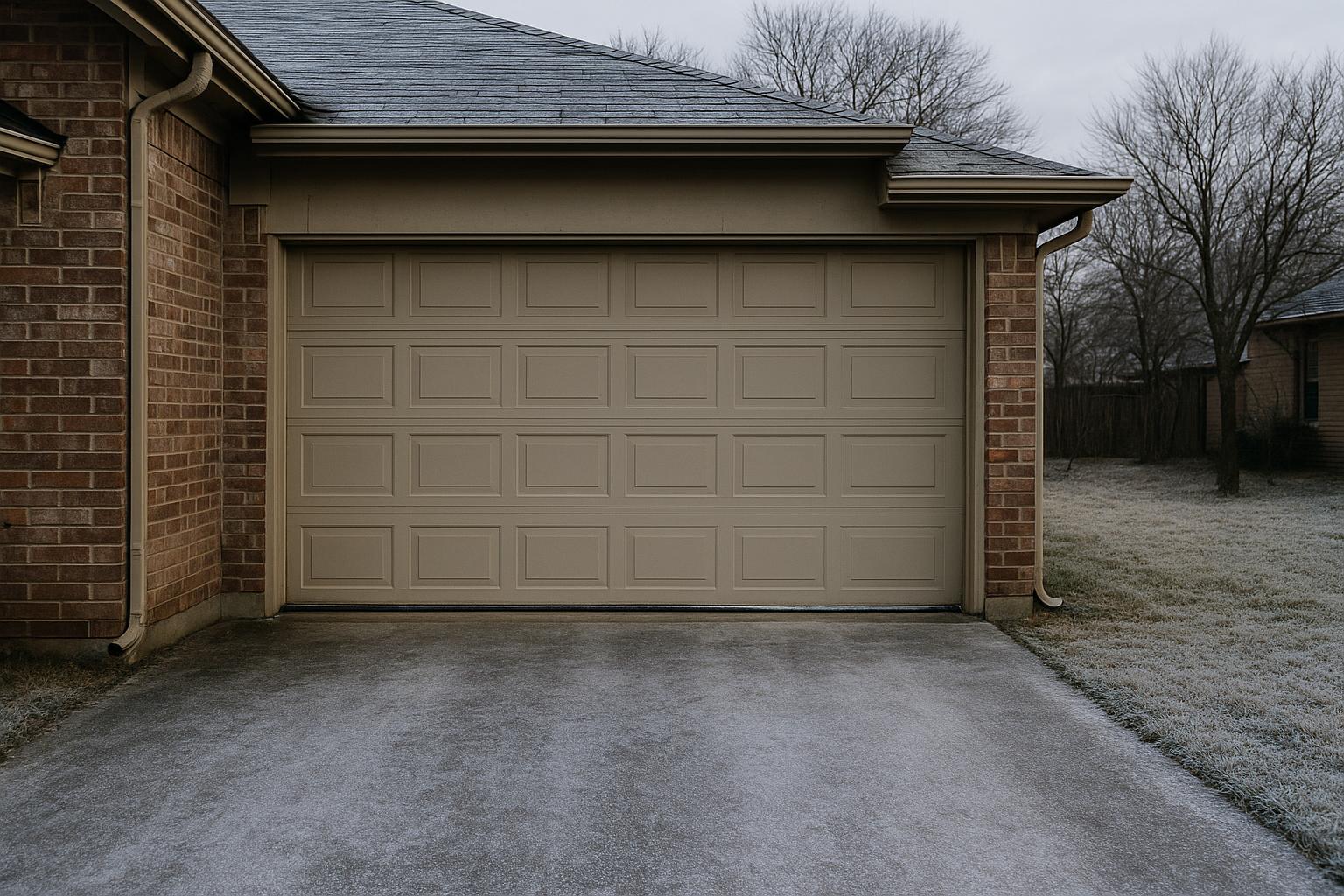
Cold Weather and Garage Door Problems Go Hand in Hand
If you've ever walked into your garage on a freezing Haltom City morning, pressed the button on your opener, and heard nothing but a groan or a click — you're not alone. Cold weather is one of the most common culprits behind garage doors that suddenly refuse to cooperate.
North Texas winters may not be as brutal as what they deal with up north, but our sudden temperature drops, ice storms, and overnight freezes are more than enough to cause real problems for your garage door system. The good news is that most cold-weather garage door issues are preventable, and many of them have straightforward fixes.
Let's walk through the most common reasons your garage door won't open when temperatures drop and what you can do about each one.
1. The Weatherstripping Is Frozen to the Ground
This is the number one cold-weather garage door complaint. The rubber weatherstripping along the bottom of your garage door can freeze to your driveway or garage floor when moisture gets trapped underneath and temperatures drop below freezing overnight.
When you try to open the door, the opener strains against the frozen seal, and the door either won't budge or the opener gives up and shuts off to protect itself.
What to Do
- Never force the door open with the opener — this can damage the weatherstripping, the opener motor, or the door itself.
- Use a heat gun or hair dryer along the bottom edge to gently melt the ice.
- You can also carefully use a flat shovel or putty knife to break the seal between the weatherstripping and the ground.
- To prevent this from happening again, apply a thin layer of silicone-based lubricant to the bottom seal before the next freeze.
2. Metal Components Have Contracted
Garage doors rely on a system of metal parts — tracks, springs, hinges, and rollers. When temperatures plummet, metal contracts slightly. This contraction can cause tracks to tighten, rollers to bind, and springs to lose some of their tension.
You might notice that the door moves sluggishly, gets stuck partway up, or feels heavier than usual when you try to lift it manually.
What to Do
- Inspect the tracks for any visible gaps, bends, or areas where the rollers seem to be catching.
- Apply a garage door-specific lubricant (not WD-40, which is a solvent, not a lubricant) to the tracks, rollers, hinges, and springs.
- If the door still feels unusually heavy or won't stay open when lifted manually, the springs may need adjustment — and that's a job for a professional.
3. Your Garage Door Opener Struggles in the Cold
Garage door openers are mechanical and electrical devices, and cold weather affects both sides of that equation. Thickened grease inside the motor, reduced battery power in backup systems, and cold-stiffened drive mechanisms can all slow things down or prevent the opener from working entirely.
What to Do
- Check the batteries in your remote and wall-mounted keypad — cold weather drains batteries faster than you'd expect.
- If your opener has a backup battery, test it. These batteries lose capacity in cold conditions and may need replacement.
- Listen to the motor when you press the button. If it hums but the door doesn't move, the drive mechanism may be struggling against a door that's too stiff or heavy for it to handle in the cold.
- If the opener is more than 10-15 years old and routinely struggles in winter, it may be time to consider a replacement with a newer, more powerful model.
4. Hardened or Dried-Out Lubricant
The lubricant on your garage door's moving parts doesn't last forever. Over time it dries out, and cold weather accelerates the problem. When lubricant hardens, every moving part in the system has to work harder — the springs, the rollers, the hinges, and the opener motor.
What to Do
- At least twice a year — ideally before summer and before winter — apply a lithium-based or silicone-based garage door lubricant to all moving parts.
- Pay special attention to the torsion springs, roller stems, hinges, and the opener's rail or chain.
- Wipe away any old, gummy lubricant before applying fresh product.
5. Misaligned or Damaged Sensors
Your garage door's safety sensors sit near the bottom of the door tracks, and they're sensitive to disruption. In cold weather, frost can form on the sensor lenses. Ice or debris kicked up during a freeze can also knock them out of alignment. If the sensors can't communicate properly, the door may refuse to close — or in some cases, won't respond at all.
What to Do
- Check both sensor units for frost, condensation, or dirt on the lenses. Wipe them clean with a soft cloth.
- Make sure both sensors have steady indicator lights. A blinking light usually means they're misaligned.
- Gently adjust the sensors so they point directly at each other across the door opening.
6. The Door Itself Is Warped
Wooden garage doors are especially vulnerable to cold-weather warping. When temperatures swing dramatically — something Haltom City residents know all too well — wood expands and contracts with moisture changes. Over time, this can cause panels to bow, twist, or no longer sit flush in the tracks.
Steel and aluminum doors are more resistant to warping, but even they can develop issues if the door has been dented or damaged previously.
What to Do
- Inspect the door from inside the garage with the door closed. Look for visible gaps, bowing, or areas where daylight is coming through unevenly.
- Minor warping can sometimes be corrected by a professional, but severe warping usually means it's time for a new door.
- If you're replacing a wooden door, consider upgrading to an insulated steel door that handles temperature swings much better.
Preventive Maintenance Is Your Best Defense
Most cold-weather garage door failures are preventable with a little preparation. Here in Haltom City and across the Tarrant County area, we recommend scheduling a maintenance visit before winter sets in each year. A professional tune-up typically includes lubrication, spring tension checks, sensor alignment, weatherstripping inspection, and a full operational test.
Think of it like winterizing your car — a small investment now prevents a much bigger headache when you're standing in your freezing garage at 7 a.m. trying to get to work.
When to Call a Professional
Some cold-weather issues are easy to handle on your own — wiping down sensors, replacing batteries, or applying lubricant. But other problems require professional help:
- Spring adjustment or replacement — garage door springs are under extreme tension and can cause serious injury if handled incorrectly.
- Opener motor failure — if the motor is burned out or the drive mechanism is damaged, it needs professional diagnosis.
- Track realignment — bent or shifted tracks require specialized tools and expertise.
- Door replacement — if warping or damage is beyond repair, a professional can help you choose and install the right door for your home.
At Haltom City Garage Door, we've helped homeowners and businesses across Haltom City, Fort Worth, North Richland Hills, Watauga, and Saginaw keep their garage doors running reliably through every season. If your garage door is giving you trouble this winter — or you want to make sure it doesn't — give us a call. We'll get it sorted out.