
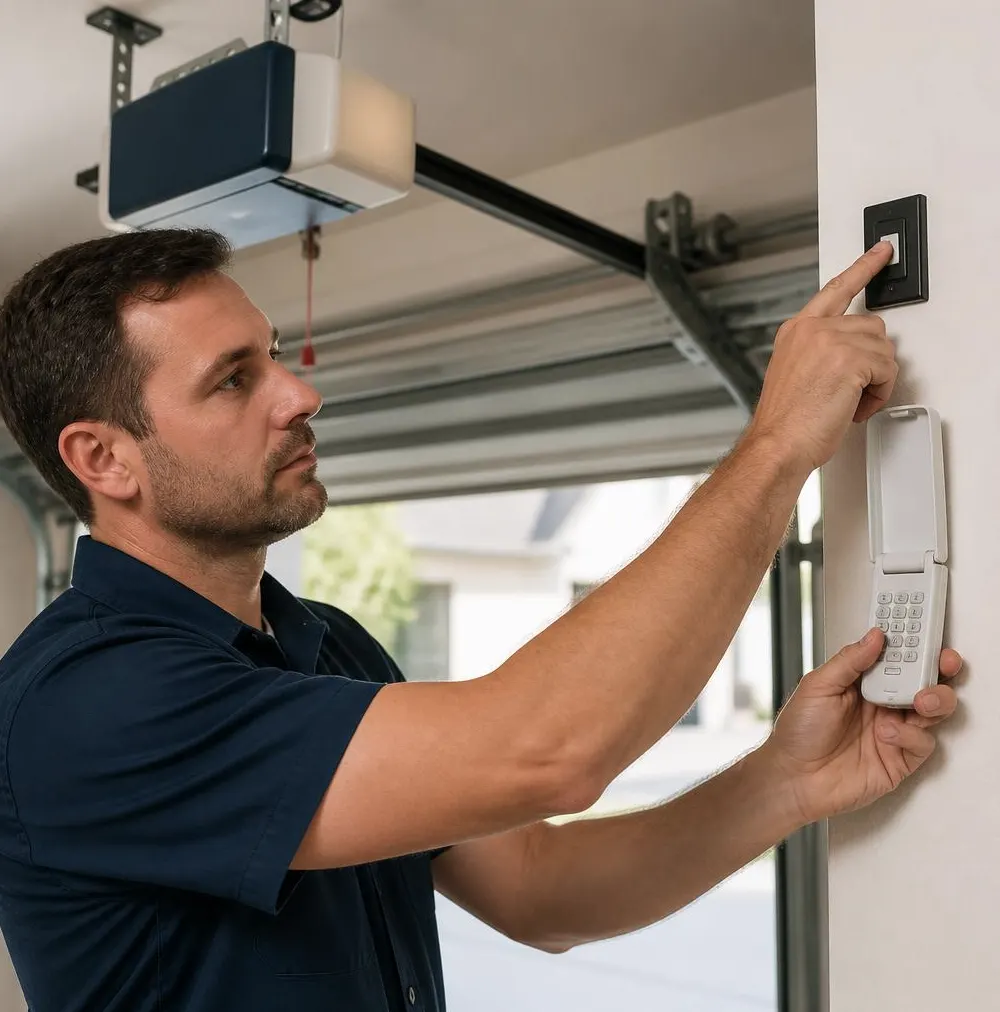
Rule of thumb: only pull the emergency release cord when the door is fully closed, you know why the opener isn't working, and you're prepared to lift the door by hand. Everything else is an exception, and a couple of those exceptions matter a lot more than people realize.
What the Cord Actually Does
That red handle dangling from the trolley disconnects the garage door from the opener's carriage. Once it's pulled, the motor is no longer attached to the door at all. The door's springs, not the opener, are what hold its weight. This is useful, because it means you can raise and lower the door by hand when the opener fails. It's also the reason the cord can go very wrong, because if the springs aren't doing their job, nothing is holding the door up anymore.
When Pulling It Is the Right Call
- Power is out and you need the car. Sudden storms roll through Tarrant County often enough that a dead opener mid-errand isn't rare. If the door is closed and balanced, the cord lets you lift it manually without drama.
- The opener motor runs but the door doesn't move. This usually points to a stripped gear or broken opener component, not the door itself. Disconnecting lets you confirm the door moves freely on its own, which tells your technician a lot before they even arrive.
- You're testing door balance. With the door disconnected and closed, lift it about halfway. A properly balanced door stays put on its own. If it drops or shoots up, that's a spring problem, not an opener problem.
When Pulling It Makes Things Worse
The exceptions are the part most homeowners never hear about until something breaks.
- A broken or badly weakened spring. This is the big one. If a spring has already snapped, or is visibly stretched, gapped, or rusted through, the door has little or nothing holding its weight. A standard residential door weighs somewhere in the 130 to 400 pound range depending on material and size. Pull the cord on a door with a bad spring and it can free-fall, with real risk to anyone nearby and to anything underneath it, including a car.
- The door is already open when you pull it. Even with good springs, an open door that's disconnected can come down hard and fast if anything shifts. Always disconnect with the door fully closed.
- Something or someone is caught under a moving door. Instinct says pull the cord to stop it. Don't. Hit the wall button or transmitter first, or manually push the door back up. Pulling the release while the door is in motion doesn't stop it, it just removes the one thing still controlling its movement.
- The door is off its track. If a track got bent or knocked loose, which happens more than people expect after high wind or a stray basketball, disconnecting and forcing the door by hand can bend the track further or pop rollers out entirely.
A Seasonal Note Worth Remembering
Heading into the cooler months, Tarrant County still sees its share of sudden wind and storm activity, and power blips tend to happen at the worst possible time, usually when you're already late. That's exactly when people grab the red cord without checking the spring first. Before you pull it during an outage, take two seconds to glance at the springs above the door. If one looks snapped, stretched, or visibly uneven compared to the other, leave the door alone and find another way to move your car.
If You're Not Sure, That's the Signal to Call
If you've pulled the cord and the door won't stay up, feels unusually heavy, or dropped faster than expected, stop using it manually and call Haltom City Garage Door. We'll check whether it's a spring replacement situation or a garage door repair for a track, roller, or opener issue, and we'll reconnect everything correctly so the cord is ready for the next time you actually need it.
If your garage door in Haltom City, TX isn't behaving the way it should, don't guess with the emergency release. Give Haltom City Garage Door a call and we'll get it sorted safely.