
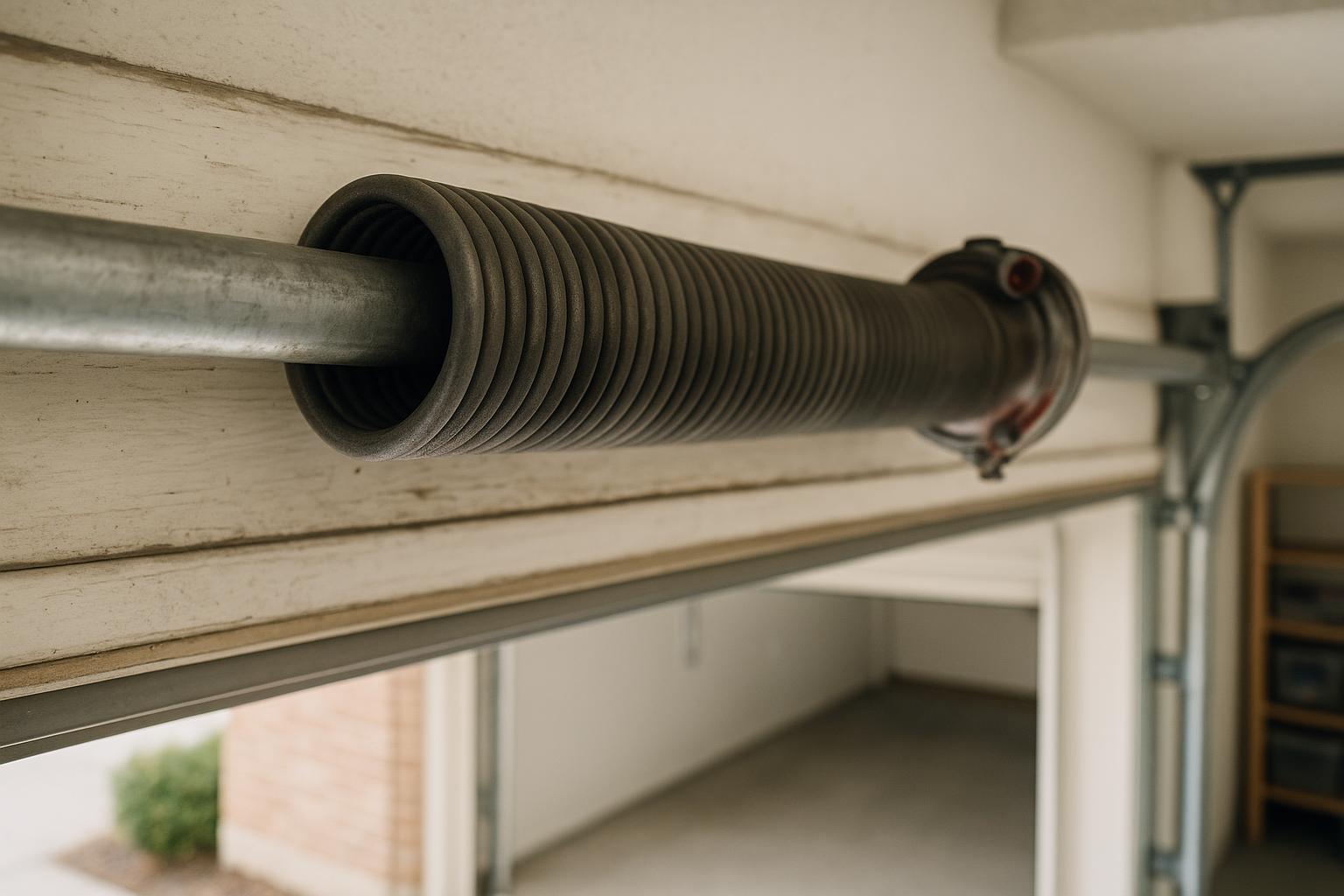
Your Garage Door Springs Are Doing More Work Than You Think
Every time you open or close your garage door, the springs are doing the heavy lifting — literally. A standard two-car garage door can weigh anywhere from 150 to 300 pounds, and without properly functioning springs, your opener alone can't handle that load. Yet most homeowners in Haltom City and the surrounding area rarely think about their garage door springs until something goes wrong.
Understanding the lifespan of your springs, recognizing the warning signs of wear, and knowing when to schedule a replacement can save you from a sudden breakdown — or worse, a dangerous situation.
How Long Do Garage Door Springs Last?
The lifespan of a garage door spring is measured in cycles. One cycle equals one full open and one full close of the door. Most standard torsion springs are rated for approximately 10,000 cycles, which translates to roughly 7 to 10 years for the average household that opens and closes the door 3 to 5 times per day.
However, several factors can shorten or extend that lifespan:
- Frequency of use: If your garage door serves as your primary entrance, you may be running 8 to 10 cycles per day, cutting the spring's life in half.
- Climate and humidity: Here in North Texas, our hot summers and occasional humidity can accelerate rust and corrosion on uncoated springs.
- Maintenance habits: Springs that are regularly lubricated and inspected tend to last longer than neglected ones.
- Spring quality: Higher-end springs rated for 20,000 or even 25,000 cycles are available and can double the lifespan of standard springs.
Torsion Springs vs. Extension Springs
Before we go further, it helps to know which type of springs your garage door uses. There are two main types:
Torsion Springs
These are mounted on a metal shaft directly above the garage door opening. They use torque to lift the door and are the more common type found on modern garage doors. Torsion springs are generally considered safer and more durable than extension springs.
Extension Springs
These run along the horizontal tracks on either side of the door. They stretch and contract to provide lifting force. Extension springs are more common on older or lighter garage doors and are typically less expensive, but they can pose a greater safety risk if they snap without a safety cable in place.
Regardless of which type your home in Haltom City has, both will eventually wear out and need replacement.
Warning Signs Your Garage Door Springs Are Wearing Out
Springs rarely fail without giving you some advance warning. Here are the most common signs that your springs are nearing the end of their life:
- The door feels heavier than usual: If your garage door seems harder to lift manually or your opener is straining, the springs may be losing tension.
- The door opens unevenly: When one spring wears faster than the other, the door may tilt or rise crookedly.
- Visible gaps in the spring coils: A torsion spring that's stretched or shows gaps between the coils is close to breaking.
- Loud bang from the garage: If you heard a loud sound like a firecracker coming from your garage, a spring may have already snapped. This is one of the most common calls we get from homeowners across Haltom City and Fort Worth.
- The door won't stay open: A garage door that slowly slides down when it should stay in the open position is a telltale sign of weakened springs.
- Jerky or shaky movement: If the door hesitates, jerks, or shakes during operation, the springs may be providing inconsistent force.
Can You Replace Garage Door Springs Yourself?
This is one of the most common questions we hear, and the short answer is: we strongly advise against it. Garage door springs are under extreme tension. A torsion spring on a standard residential door can hold enough force to cause serious injury or even death if it's improperly handled.
Every year, thousands of DIY injuries are reported from garage door spring replacement attempts. The specialized tools, precise measurements, and experience required make this a job best left to trained professionals. It's simply not worth the risk to save a few dollars.
What to Expect During a Professional Spring Replacement
When you call a professional garage door company for spring replacement, here's what the process typically looks like:
- Inspection: A technician will assess the current springs, cables, and hardware to determine the full scope of the repair.
- Spring selection: The correct spring size, wire gauge, and length are critical. Your technician will match the replacement springs to your door's weight and size.
- Safe removal: The old springs are carefully unwound and removed using professional winding bars and safety equipment.
- Installation: New springs are installed, wound to the correct tension, and tested for proper balance.
- Full system check: A good technician will also inspect your cables, rollers, hinges, and opener to make sure everything is working together properly.
The entire process usually takes about an hour for a standard residential garage door.
Should You Replace Both Springs at the Same Time?
If your garage door has two torsion springs and only one has broken, we almost always recommend replacing both at the same time. Here's why:
- Both springs were installed at the same time and have the same number of cycles on them.
- If one has broken, the other is likely close behind.
- Replacing both at once saves you the cost of a second service call in the near future.
- Mismatched springs — one new and one worn — can cause uneven lifting and put extra strain on your opener.
Extending the Life of Your Garage Door Springs
While springs will eventually wear out no matter what, regular maintenance can help you get the most out of them. Here are a few tips for homeowners in Haltom City and the surrounding Tarrant County communities:
- Lubricate your springs every 3 to 6 months with a silicone-based garage door lubricant. This reduces friction and helps prevent rust.
- Schedule an annual maintenance inspection to catch early signs of wear before they turn into a breakdown.
- Keep an eye on balance. Disconnect your opener and manually lift the door halfway. If it stays in place, the springs are properly balanced. If it falls or rises, the tension may need adjustment.
- Consider upgrading to high-cycle springs during your next replacement. The upfront cost is slightly higher, but the extended lifespan makes it a worthwhile investment.
Don't Wait for a Breakdown
A broken garage door spring is more than an inconvenience — it can leave your car trapped inside, compromise your home's security, and create a genuine safety hazard. If you've noticed any of the warning signs mentioned above, or if your springs are approaching the 7 to 10 year mark, it's time to have them inspected.
At Haltom City Garage Door, we provide fast, professional spring replacement for homeowners throughout Haltom City, Fort Worth, North Richland Hills, Watauga, and Saginaw. We show up on time, use quality parts, and make sure your door is balanced and safe before we leave. Give us a call today to schedule an inspection or replacement.